← Nazaj na blog ← Back to the blog
Stalne stranke

Kako pogosto lahko strankam pošiljate sporočila, ne da bi jih izgubili
10. August 2026

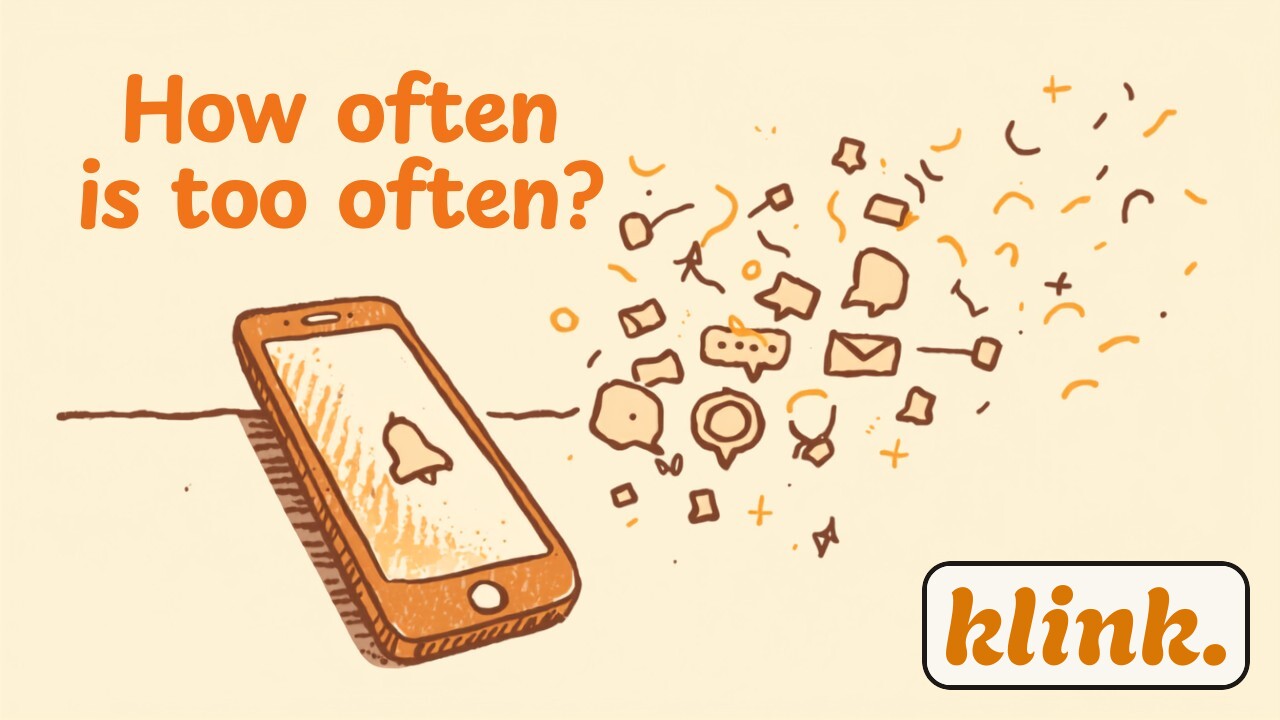
Telefon na pultu kavarne kaže eno prijazno obvestilo, medtem ko manjši telefon ob strani utaplja pod kupom obvestil — v topli jantarni in kremni barvi.

Ko preidete s papirnatih kartončkov na digitalno kartico zvestobe, dobite nekaj, česar prej niste imeli: neposredno pot do telefona stranke. To je čudovito orodje — in prav zato tudi nevarno. Ko lahko z enim klikom dosežete vse svoje stranke hkrati, se skušnjava, da bi to počeli pogosto, hitro prikrade. Vsak tih dan se zdi kot zamujena priložnost. Toda ravno tu se največ programov zvestobe tiho pokvari.

Resnica je preprosta: stranka vam da dovoljenje za obveščanje enkrat, ob vpisu. To dovoljenje pa lahko vzame nazaj kadarkoli — z enim samim tapkom na »utišaj obvestila« ali »odjava«. In ko je enkrat izgubljeno, se skoraj nikoli ne vrne. Vprašanje torej ni »koliko sporočil lahko pošljem?«, ampak »koliko jih lahko pošljem, ne da bi izgubil pravico, da jih sploh pošiljam?«.

Najpogostejši žig sploh ni sporočilo, ki bi ga poslali

Preden se sploh vprašate o kampanjah, se je vredno spomniti nečesa pomembnega. Vsakič, ko stranka pri vas dobi žig, se njena kartica v denarnici posodobi v realnem času — nov žig se pojavi na telefonu takoj. To je najpogostejši, najbolj dobrodošel »stik« med vami in stranko, in ne stane niti enega obvestila, ki bi ga morali sami sestaviti. Stranka ga pričakuje in ga ima rada, ker je dokaz napredka proti nagradi.

To pomeni, da je večina komunikacije, ki jo program zvestobe potrebuje, že vgrajena v same obiske. Ročna sporočila — potisna obvestila, ki jih pošljete vsem naenkrat — so dodatek, ne osnova. Če to obrnete in na potisna obvestila gledate kot na glavni motor programa, boste skoraj zagotovo pošiljali preveč.

Ločite tri vrste sporočil

Ni vsako sporočilo enako. Ko govorimo o »pogostosti«, v resnici mešamo tri zelo različne stvari, ki vsaka nosi svoj ritem. Šele ko jih ločite, postane vprašanje pogostosti obvladljivo.

ob vsakem obisku

Žig in nagrada

Samodejno, sproženo z dejanjem stranke. Nikoli ni preveč, ker si ga je stranka pravkar prislužila. To je srce programa.

osebno, ob pravem trenutku

Samodejna osebna sporočila

Rojstnodnevni žig, opomnik, ko nekdo dolgo ni prišel, čestitka ob mejniku. Ker jih dobi le prava oseba ob pravem času, se zdijo pozorna, ne moteča.

redko in z razlogom

Množične kampanje

Obvestilo, ki gre vsem hkrati: nova ponudba, dogodek, sezonska novost. To je vrsta, s katero je najlažje pretiravati — in prav to je treba omejiti.

Prvi dve vrsti sta praktično neizčrpni, ker sta vezani na posameznika. Rojstnodnevni žig frizerskemu salonu ne pokvari ugleda, tudi če ga sistem pošlje vsak dan nekomu drugemu — vsaka stranka ga vidi enkrat na leto. Nevarnost skoraj vedno tiči v tretji vrsti: v množičnem obvestilu, ki gre vsem, ne glede na to, ali jih zanima ali ne.

Ritem za tretjo vrsto: manj, kot mislite

Za množične kampanje velja preprosto vodilo: pošljite jih le takrat, ko imate za stranko nekaj resnično vrednega, in raje redkeje kot pogosteje. Za večino malih lokalov to pomeni nekaj sporočil na mesec — ne na teden. Kavarna, ki vsak ponedeljek pošlje »pridite na kavo«, bo v mesecu dni ugotovila, da polovica strank obvestila utiša. Kavarna, ki dvakrat na mesec pošlje nekaj konkretnega — nov sezonski napitek, podaljšan urnik pred prazniki — ostane dobrodošla v telefonu.

Preden pošljete množično sporočilo, si zastavite eno vprašanje: bi bil kot stranka vesel, da sem ga dobil? Če odgovor ni jasen »da«, ga ne pošljite.

Pomaga tudi, da ne pišete vedno vsem. Sporočilo o novem jutranjem meniju je smiselno poslati tistim, ki hodijo zjutraj, ne pa tudi rednim popoldanskim gostom. Ko sporočilo naslovite na prave ljudi, jih pošljete manj — in vsako od njih je bolj zadeto. Manj hrupa za stranko pomeni več pozornosti za tisto, kar zares šteje.

Naj vam ritem stranke narekuje pogostost

Vsaka panoga ima svoj naravni ritem obiskov, in ta ritem naj določa vaš. Kavarno stranka obišče morda večkrat na teden; frizerja vsakih šest ali osem tednov. Frizerskemu salonu tedensko obvestilo nima smisla — stranka tako ali tako ne pride prej. Njemu bolj koristi eno dobro premišljeno sporočilo ob koncu običajnega cikla: »čas je za naslednji obisk«. Poslušajte, kako pogosto ljudje sploh prihajajo, in svojih sporočil nikoli ne pošiljajte pogosteje od tega.

Digitalna kartica vam da orodje, s katerim to lahko počnete pametno. V klink. vidite, kdo se vrača in kdo je izginil, zato lahko sporočilo naslovite na prave ljudi namesto na vse po vrsti. Ta ista podatkovna slika je najboljša obramba pred pretiravanjem: ko vidite, komu se sporočilo splača poslati, ni več skušnjave, da bi ga poslali vsem.

Neposredna pot do stranke je dragocena prav zato, ker je redka. Varujte jo tako, kot bi si želeli, da drugi varujejo vašo pozornost — in ostala vam bo odprta še dolgo.

Sorodno branje: Win-back kampanje, ki stranke dejansko pripeljejo nazaj in nagrade ob mejnikih, ki stranke obdržijo.

Če želite pošiljati sporočila, ki jih stranke pričakujejo namesto utišajo, preizkusite klink. brezplačno 14 dni in postavite svojo prvo digitalno kartico zvestobe — brez kreditne kartice.

Repeat customers

How often to message loyal customers without losing them

August 10, 2026

A phone on a café counter shows one friendly notification, while a smaller phone beside it drowns under a stack of alerts — in warm amber and cream tones.

When you move from paper punch cards to a digital loyalty card, you gain something you never had before: a direct line to the customer's phone. It's a wonderful tool — and that's exactly what makes it dangerous. Once you can reach every customer at once with a single tap, the temptation to do it often creeps in fast. Every quiet day starts to feel like a missed opportunity. But this is precisely where most loyalty programs quietly go wrong.

The truth is simple: a customer gives you permission to message them once, when they sign up. And they can take that permission back at any moment — with a single tap on "mute notifications" or "unsubscribe." Once it's gone, it almost never comes back. So the real question isn't "how many messages can I send?" but "how many can I send without losing the right to send any at all?"

The most frequent message isn't one you send

Before you even think about campaigns, it's worth remembering something important. Every time a customer earns a stamp from you, their wallet card updates in real time — a new stamp appears on their phone instantly. That's the most frequent, most welcome "touch" between you and the customer, and it costs you nothing to write. The customer expects it and likes it, because it's proof of progress toward a reward.

Which means most of the communication a loyalty program needs is already built into the visits themselves. Manual messages — push notifications you send to everyone at once — are the extra, not the foundation. Flip that around and treat push notifications as the main engine of the program, and you'll almost certainly send too many.

Separate the three kinds of message

Not every message is the same. When we talk about "frequency," we're really mixing three very different things, each with its own natural rhythm. Only once you separate them does the frequency question become manageable.

every visit

The stamp and the reward

Automatic, triggered by the customer's own action. It's never too much, because they just earned it. This is the heart of the program.

personal, at the right moment

Automated personal messages

A birthday stamp, a nudge when someone hasn't been in for a while, a milestone congratulation. Because only the right person gets one at the right time, they feel thoughtful, not intrusive.

rarely, and for a reason

Broadcast campaigns

A notification that goes to everyone at once: a new offer, an event, a seasonal launch. This is the kind that's easiest to overdo — and the one to keep on a tight leash.

The first two are practically inexhaustible, because they're tied to an individual. A birthday stamp doesn't wear out a hair salon's welcome even if the system sends one to somebody every single day — each customer only sees it once a year. The danger almost always sits in the third kind: the broadcast that goes to everyone, whether it's relevant to them or not.

The rhythm for the third kind: less than you think

For broadcast campaigns, one guideline holds: only send them when you have something genuinely worth a customer's attention, and lean toward rarer rather than more often. For most small shops that means a few messages a month — not a week. A café that sends "come in for a coffee" every Monday will find, within a month, that half its customers have muted the alerts. A café that sends something concrete twice a month — a new seasonal drink, extended hours before the holidays — stays welcome on the phone.

Before you send a broadcast, ask yourself one thing: as a customer, would I be glad I got this? If the answer isn't a clear yes, don't send it.

It also helps not to message everyone every time. A note about a new breakfast menu makes sense for the people who come in the morning, not for your regular afternoon crowd. When you aim a message at the right people, you send fewer of them — and each one lands better. Less noise for the customer means more attention for the things that truly matter.

Let the customer's rhythm set the frequency

Every trade has its own natural visit rhythm, and that rhythm should set yours. A café might see a customer several times a week; a hairdresser every six or eight weeks. A weekly notification makes no sense for a hair salon — the customer won't come in any sooner anyway. What serves them is one well-timed message near the end of their usual cycle: "time for your next visit." Listen to how often people actually come in, and never message them more often than that.

A digital card gives you the tool to do this well. In klink. you can see who's coming back and who has drifted away, so you can aim a message at the right people instead of blasting everyone. That same picture is your best defence against overdoing it: once you can see who a message is actually worth sending to, the urge to send it to everyone quietly disappears.

A direct line to your customer is valuable precisely because it's rare. Guard it the way you'd want others to guard your own attention — and it will stay open to you for a long time.

Related reading: Win-back campaigns that actually bring customers back and milestone rewards that keep customers coming back.

If you'd like to send messages customers look forward to instead of muting, try klink. free for 14 days and set up your first digital loyalty card — no credit card required.